
Managing Forests for Native Wildlife
By Margaret Kreder, Forestry & Wildlife Program Coordinator at Mason Conservation District
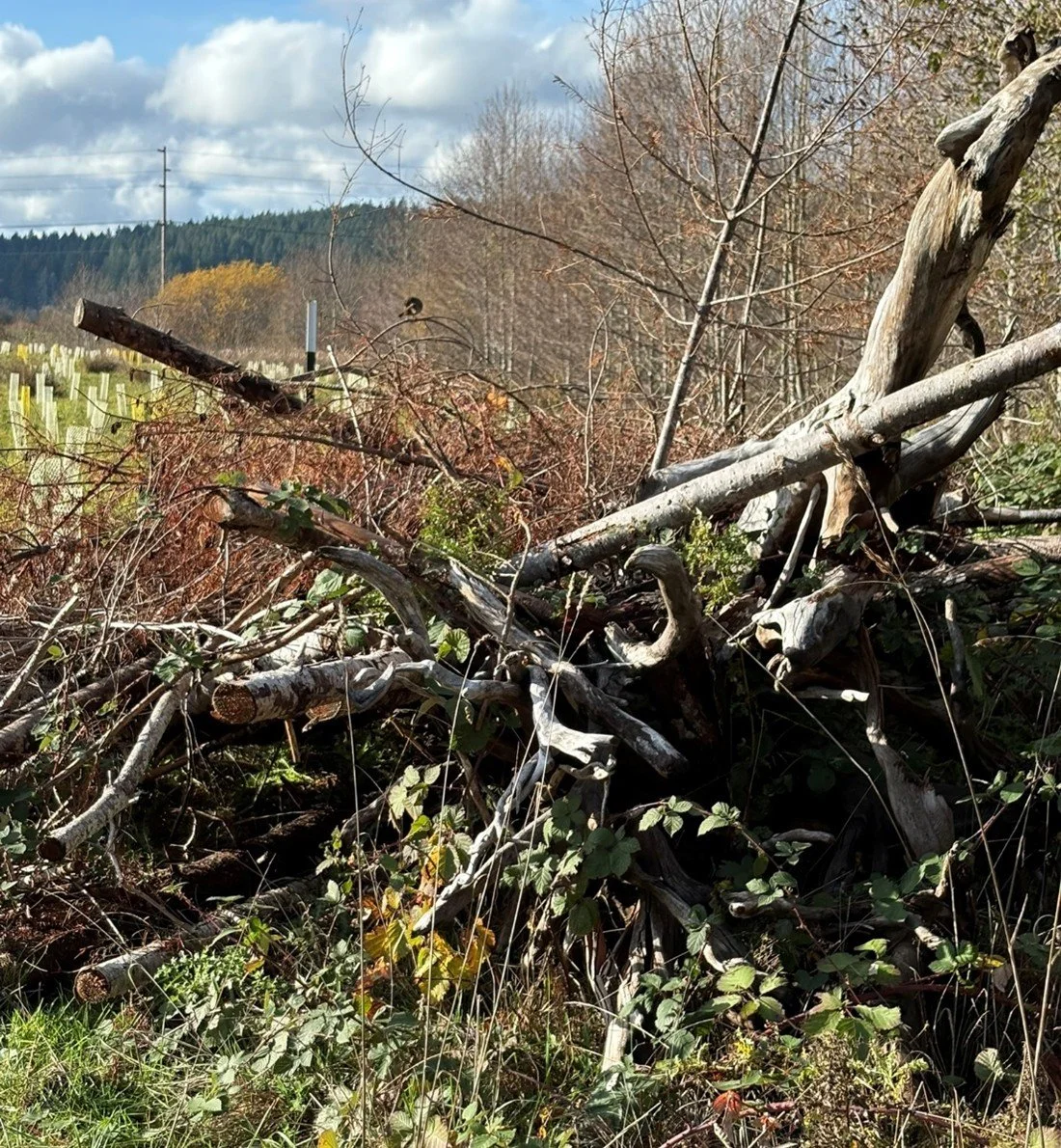
This wildlife habitat pile was constructed utilizing a large piece of driftwood and several smaller Douglas-fir trees cut as part of a forest health thinning. It is located on the edge of a field recently planted with native plants and a small slough, providing future forage and water for wildlife which may utilize it. Game cameras were set up on site and so far have captured a juvenile Cooper’s hawk, barn owl, rabbits, smaller birds, and small mammals utilizing the pile as well as several curious deer stopping by to check it out.
Picture walking along a forest trail during the summer, a common activity for many in the Pacific Northwest. Around you the area is literally abuzz with activity. Bumble bees bump into bunches of elderberry flowers, a wren rustles in the fronds of sword ferns hunting for spiders and insects, a Douglas squirrel chitters at you from a perch high above, while a crow gives an echoing caw as you pass underneath its tree. These are some of the sounds that help define our forest ecosystems. But what if something is missing?
To keep it short, due to modern development and varied land management over the years, much of our landscape compositions and their cycles have been altered from previous conditions, resulting in differences in habitat types and arrangements which can impact our populations of creatures that depend on these habitats. Some species have a much more difficult time adjusting, needing more specific conditions to thrive, leading to many of their populations becoming at risk or endangered.
It's important to recognize that habitat cannot be maximized in one space for every species, due to the differences in species’ needs and preferences. Different types of habitats on various scales are important. However, focusing on creating diversity within your landscape as site conditions allow is one of the best ways to provide habitats for a wider range of our native species.
For those in more urban areas a few great options to increase pollinator and wildlife habitat include:
1) Leave the Leaves! *
2) Plant native species where possible
3) Plant the right tree for the right place X
4) Mitigate possible conflicts through securing garbage or other harmful substances
5) Discuss opportunities with local municipalities for wildlife-friendly landscaping
For those who own a small woodlot or forestland, in the article Family Forests and Wildlife: What You Need to Know + authors Coe, Strong, and Bevis identified a general list of “Top 10 Tools for Wildlife” to consider for your property including:
1) Keep forests as forests
2) Leave or create down logs
3) Leave or create snags
4) Retain legacy structures such as big old trees and stumps
5) Leave standing live trees for future legacy structure recruitment
6) Provide safe access to water
7) Leave or recruit hardwood and fruiting shrubs across the landscape
8) Leave or recruit hardwood trees across the landscape
9) Maintain well-vegetated riparian buffers
10) Control invasive species
If you have questions or would like to know more about how to implement these types of practices in your area, reach out to the Jefferson County Conservation District!
Contact information:
Jefferson County Conservation District
360-385-4105
Resources cited in this article: * Leave the Leaves: Winter Habitat Protection | Xerces Society X The Right Tree for the Right Place | Arbor Day Foundation + Family Forests and Wildlife - Woodland Fish and Wildlife
This project has been funded wholly or in part by the United States Environmental Protection Agency under assistance agreement PC-01J89501 through the Washington Department of Fish and Wildlife. The contents of this document do not necessarily reflect the views and policies of the Environmental Protection Agency or the Washington Department of Fish and Wildlife, nor does mention of trade names or commercial products constitute endorsement or recommendation for use.